



![SINGLE PHASE AC PANEL METER - [ABM]](https://factoryinputs.in/wp-content/uploads/2025/11/81282av-22-regular-430x430.jpg)
![THREE PHASE PANEL METER - [ABM]](https://factoryinputs.in/wp-content/uploads/2025/11/mpd-96-three-phase-protection-device-500x500-1-354x430.webp)
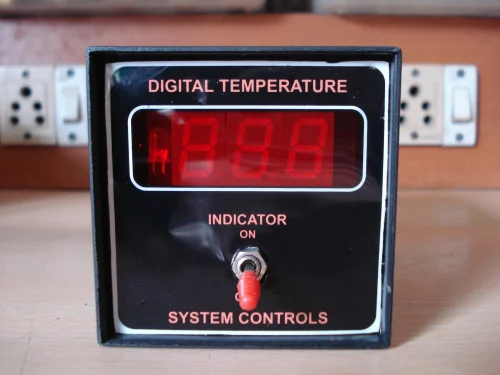
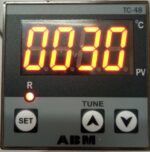
- DIGITAL TEMPRATURE INDICATOR
- FIXED INPUTS
ABM - INSTRUMENT
ABM - INSTRUMENT
A digital temperature indicator is an electronic device that processes signals from a temperature sensor and displays the measured temperature as a numerical value on a digital screen (typically an LED or LCD display). They are widely used for their accuracy, ease of reading, and versatility across various applications
How It Works
The fundamental principle of a digital temperature indicator is the conversion of a temperature-dependent physical change into a digital electrical signal. The process involves the following key steps:
- Sensing: A temperature sensor (probe) is exposed to the environment or object being measured. The sensor's electrical properties (resistance or voltage) change in proportion to the temperature change.
- Signal Conditioning: The raw analog signal from the sensor is often weak or may contain noise. This signal is amplified and conditioned by an internal circuit to prepare it for processing.
- Analog-to-Digital Conversion (ADC): An Analog-to-Digital Converter (ADC) transforms the continuous analog signal into a digital format that can be read and processed by a microcontroller or microprocessor.
- Processing: A microcontroller receives the digital data and applies specific algorithms and calibration factors (e.g., the Callendar-Van Dusen equation for RTDs or look-up tables for thermocouples) to linearize the reading and convert it into a standard temperature unit (Celsius, Fahrenheit, or Kelvin).
- Display: The final calculated temperature is sent to a digital display (LED or LCD) for the user to read.
Key Components
- Temperature Sensor: The probe that detects temperature (e.g., thermocouple, RTD, thermistor, or semiconductor-based IC sensor).
- Signal Conditioning Circuitry: Amplifiers and filters to improve the sensor signal quality.
- Analog-to-Digital Converter (ADC): Converts the analog sensor output into digital data.
- Microcontroller/Microprocessor: The "brain" of the device that processes the data, performs calculations, and manages the display.
- Digital Display: A 7-segment LED or LCD screen for showing the numerical temperature value.
- Power Supply: Provides the necessary power to the electronic components (e.g., batteries or AC power supply).
Applications
Digital temperature indicators are used in a wide array of settings:
- Healthcare: Clinical thermometers, incubators, and patient monitoring systems.
- Industrial Automation: Monitoring temperatures in ovens, furnaces, chemical plants, and manufacturing processes.
- Food & Beverage: Ensuring food safety during processing, storage, and cooking.
- HVAC Systems: Monitoring air and coolant temperatures in heating, ventilation, and air conditioning systems.
- Environmental Monitoring: Weather stations, agriculture, and monitoring temperatures in water bodies or soil.
- Consumer Electronics: Thermal management in smartphones, laptops, and household appliances like refrigerators and water heatersAssuming "TI" is a shorthand for digital temperature indicator, here is an overview of different types and specific products available.
SUPPLIERS:–
The reliable manufacturers and suppliers of based in India.
Customers from all across India are placing repeated orders, as there is no alternative available in terms of quality and performance.
Premium quality raw materials are used in the manufacturing that ensures noteworthy features such as high durability and resistance to abrasion.
How to contact us
If you’ve got questions or ideas you would like to share, send a message. For anything more specific, please use one of the addresses listed below.
Our Location :
Westside Controls 7.B.Murli Vihar Behind Canara Bank Sarojini Nagar Lucknow 226008
Factory Westside Controls
Khasra no-174, Amausi Station Road Naderganj Industrial Area Lucknow226008
Direct Line Numbers
9776806777 , 0522-3642558



Reviews
There are no reviews yet.